
How Much Amazon Takes From Every 100 in Sales
July 18, 2026
The short answer: out of every 100 your product sells for on Amazon, the platform typically keeps between 35 and 55 before you see a single cent of profit. The referral fee runs around 15 in most categories, and FBA fulfillment costs —pick, pack, ship and storage— take another 20 to 40 depending on the size and weight of the item. Whatever is left has to cover your product cost, your advertising, and, dead last in line, your margin.
That range is wide on purpose, because there is no single number. It changes by category, by fulfillment method (FBA vs. FBM), by the size of your product, and by how long it sits in the warehouse. A small, light item that turns over quickly might leave Amazon with barely 30 out of every 100. A bulky product that stalls in inventory can push Amazon’s cut past 60 once you add long-term storage. The question “how much Amazon takes from every 100” isn’t answered with a fixed percentage — it’s answered with a line-by-line breakdown.
And this is where the real pain of the multichannel seller begins: that breakdown lives in three or four different places. The commission comes from one report, the FBA fees from another, storage from a third, and if you also sell on MercadoLibre or Shopify, each channel keeps its own books. Stitching it all together by hand in a spreadsheet to know what you actually keep is work almost nobody does well — which is exactly why so many sellers believe they earn more than they do.
the referral fee: the first bite
The first deduction Amazon applies to every sale is the referral fee. It’s the percentage the platform charges for the simple act of listing and selling your product in its marketplace, calculated on the total price the buyer pays (product plus shipping, in many cases).
On Amazon most categories charge around 15%, but not all of them. Electronics tends to be lower, near 8%; accessories, jewelry, and some beauty categories can hit 20% or more. That means two products with the same sale price can leave you very different profits just because of the category you listed them in. Out of every 100, this bite is the most predictable one: it doesn’t depend on size or inventory, only on your category’s percentage.
The key point is that the referral fee is charged whether you fulfill through FBA or FBM. It’s the cost of entry to the channel. If you’re comparing Amazon against MercadoLibre, this is the first number you should line up side by side, because the two platforms’ commissions don’t match — and a product that’s profitable on one channel can be barely break-even on the other.
Glossary: unified catalog, your products across every channel →FBA fees: where the bulk goes
If you use Fulfillment by Amazon (FBA), this is where most of the variable bite goes. The fulfillment fee covers Amazon picking your product off the shelf, packing it, and shipping it to the customer. It’s calculated per unit and depends directly on size and weight: a headphone case pays little; a blender or a bulky box of supplements pays a lot more.
Out of every 100 in sales, these fees usually represent between 20 and 35 on standard-size products. On large or heavy items the percentage climbs fast, and on cheap products it can be brutal: if you sell something for 120 and the FBA fee is 45, you’re already down almost half before counting the commission and your product cost. That’s why low-price, high-volume products are so treacherous in FBA.
The upside of FBA is Prime eligibility, fast shipping, and above all the fight for the Buy Box — the default purchase position that captures most of the sales. But that upside carries a fixed per-unit cost you have to subtract in every “what do I keep” calculation.
Glossary: the Buy Box and why it drives your sales →storage: the cost that grows when you don’t sell
Here’s the part many sellers ignore until it hurts: storage. Amazon charges you for the space your inventory occupies in its warehouses, billed per cubic meter per month, with higher rates during the year-end peak season.
While your product turns over quickly, storage is a minor cost — one or two out of every 100. The trouble starts when inventory stalls. If a product goes months without selling, it picks up aged inventory surcharges that penalize every unit sitting in the warehouse too long. A product you bought expecting to sell in weeks that’s been gathering dust for half a year can end up costing you more in storage than it leaves you in profit.
This is exactly the kind of silent leak we dig into in whether Amazon FBA storage is expensive. The point for this calculation is simple: storage turns “how much Amazon takes” into a number that moves over time. It’s not a still photo; it’s a movie, and the slower you sell, the worse it gets.
advertising: the bite you decide
Technically, advertising isn’t a fee Amazon “keeps” by force, but in practice it works the same way. To fight for the Buy Box, show up in search, and not lose ground to the competition, nearly every seller devotes a slice of each sale to Amazon Ads. That spend comes out of the same 100 in sales.
A healthy ACOS runs around 10-20% of the sales advertising generates, but averaged across all your sales it can mean 5 to 15 out of every 100. The difference from the other fees is that you control this one: you can raise or lower your spend, pause campaigns that don’t convert, and choose which products to push. But if you don’t count it inside the breakdown, your real margin will always be lower than you think.
Once you add up referral + FBA + storage + advertising, you’re easily at 45 to 55 out of every 100 gone before your product cost. And your product cost hasn’t even entered the math yet.
what actually reaches your pocket
Let’s do the full calculation with an example. You sell a product for 100 on Amazon:
- Referral fee (15%): 15
- FBA fee (standard size): 28
- Prorated storage: 2
- Advertising (averaged): 8
- Amazon subtotal: 53
You’re left with 47 to cover your product cost. If that product cost you 30 between manufacturing and shipping to the warehouse, your real profit is 17 out of every 100 in sales: a 17% net margin. And that number assumes everything went right — no returns, no refunds, no stalled inventory.
That calculation, done product by product and channel by channel, is what separates the sellers who scale from those who work hard to earn little. To do it well you need clean data, and that data comes from Amazon’s APIs: commissions and fees live in the settlement reports, and understanding them is key, as we explain in what the Amazon Seller Central Reports API is.
Glossary: real net margin, with everything deducted →from three dashboards to one number
The real pain isn’t that Amazon charges — that’s the cost of reaching millions of buyers. The pain is uncertainty: not knowing, in real time, how much you actually keep after every fee has taken its bite. Most multichannel sellers live opening the Amazon panel, the MercadoLibre one, their 3PL’s sheet, and a spreadsheet where they try to reconcile it all by hand, always with last week’s data.
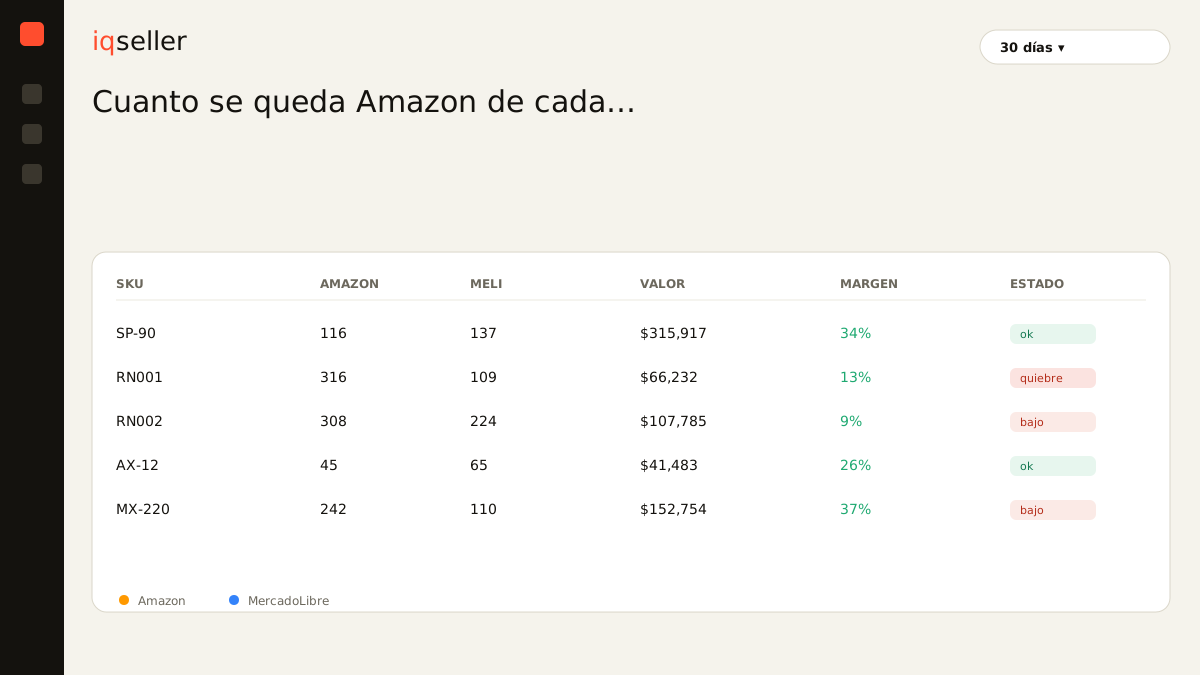
That’s exactly the problem that seeing your channels together and in real time solves. Instead of rebuilding the breakdown by hand every month, the system pulls the commission, the FBA fees, storage, and advertising straight from the source, sets them against your product cost, and tells you — per SKU, per channel — how much of every 100 actually reaches your pocket. You know instantly which product leaves you margin and which one just moves money so Amazon can win.
When you stop guessing how much Amazon keeps and start seeing it precisely, your decisions change: you raise the price on a product that was bleeding, kill a SKU that only generates work, and push advertising toward what truly leaves profit. The goal of iqseller isn’t to make Amazon charge less — that’s not in your hands — but for you to know exactly how much it charges, so every dollar of sales works for you and not against you.