
Inventory forecast: how much to restock and when (a simple method)
June 11, 2026
Restocking by gut has two bad endings: you run out during peak demand, or you bury your capital in product that doesn’t move. A forecast doesn’t need to be a complex model; it needs to answer two questions: when to order and how much.
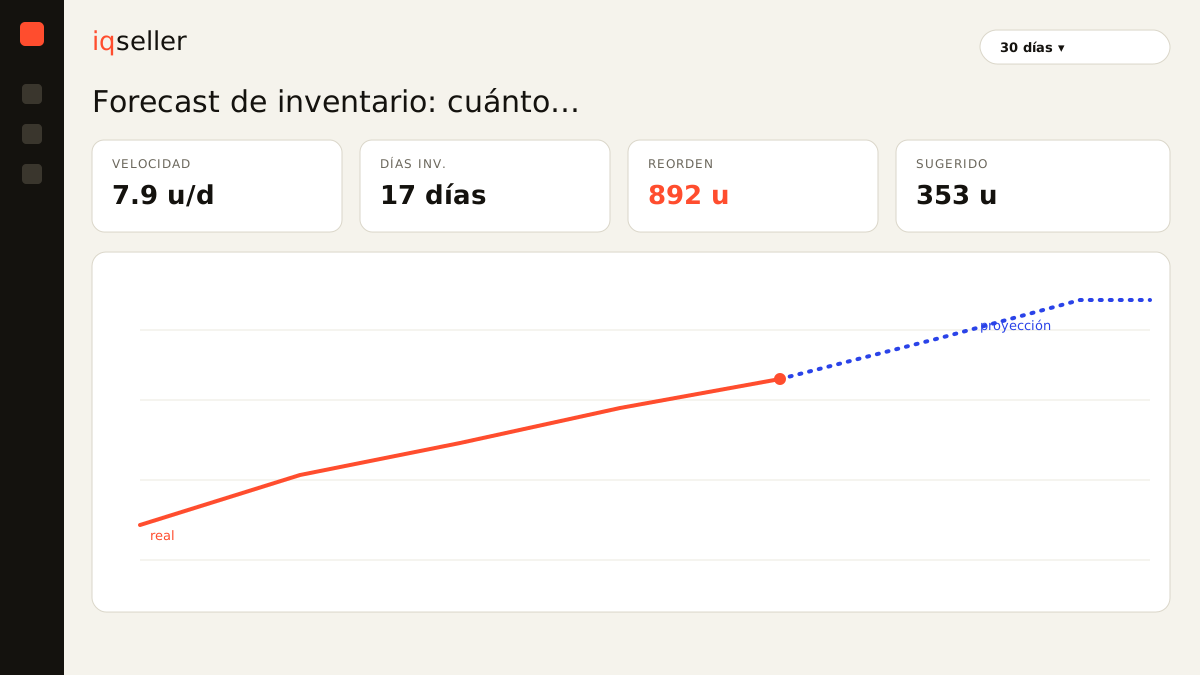
The three numbers you need
- Sales velocity (units per day): your real average, ideally from recent weeks, not the year.
- Lead time: days from ordering until the product is sellable (including production, transit and inbound to the channel).
- Safety stock: a buffer for demand swings and delays.
When to restock: the reorder point
Reorder point = (Sales velocity × Lead time) + Safety stock
When your real available hits that number, it’s time to order. Not earlier (you tie up capital) nor later (you risk a stockout).
How much to restock
The simplest thing that works: cover the period between orders plus the lead time.
Quantity = Sales velocity × (Target coverage days + Lead time) − Current stock − In-transit
Subtract what’s already on the way so you don’t double the order.
Example
You sell 8 units/day, your lead time is 30 days and you want 45 days of coverage, with 5 days of safety:
- Reorder point = (8 × 30) + (8 × 5) = 280 units
- Quantity to order = 8 × (45 + 30) − current stock − in-transit = 600 − stock − transit
The details that ruin it
- Using the annual average on a seasonal product.
- Forgetting the inbound (the time Amazon/MELI take to receive).
- Not subtracting what’s already in transit.
- Computing on total stock instead of real available.
In short
A good forecast is real velocity × lead time + safety, applied to real available and net of in-transit. Doing it by hand per SKU is where it falls apart. iqseller computes your reorder point and how much to order using your real velocity.
Want to know what to restock this week? Join the beta waitlist.