
From Excel to dashboard: when your operation needs a platform
May 21, 2026
Excel is great to start. It’s flexible, you know it and it costs nothing. But there comes a point where your spreadsheet stops helping and starts holding you back. How do you know when?
7 signs your spreadsheet has outgrown you
- You spend more time consolidating than deciding. If your morning is copy-pasting from three dashboards, the Excel is the job, not the tool.
- The data is stale by the time you open it. If the file reflects “yesterday’s cut,” you’re late to everything.
- No one else understands your file. Fragile formulas only you can touch = operational risk.
- It breaks often. One mis-pasted cell and the margin for the whole catalog is wrong.
- It can’t handle that many SKUs. What worked with 30 products collapses at 300.
- It detects nothing on its own. Excel won’t warn you of a stockout; you have to go find it.
- It doesn’t join channels well. Summing Amazon + MELI + 3PL by hand is exactly where errors enter.
What you gain with a dashboard
- Data that updates itself, not manual cuts.
- One single truth of catalog, inventory and margin, unified by GTIN.
- Automatic alerts for stockouts, prices and anomalies.
- Decisions in minutes, not whole mornings of copy-paste.
- Scale: 30 or 3,000 SKUs, the same effort.
It’s not trashing your Excel, it’s graduating
Your Excel did its job: it got you here. The change isn’t a fad — it’s that your operation grew faster than your tool. When the cost of consolidating by hand exceeds that of a platform, the decision becomes obvious.
In short
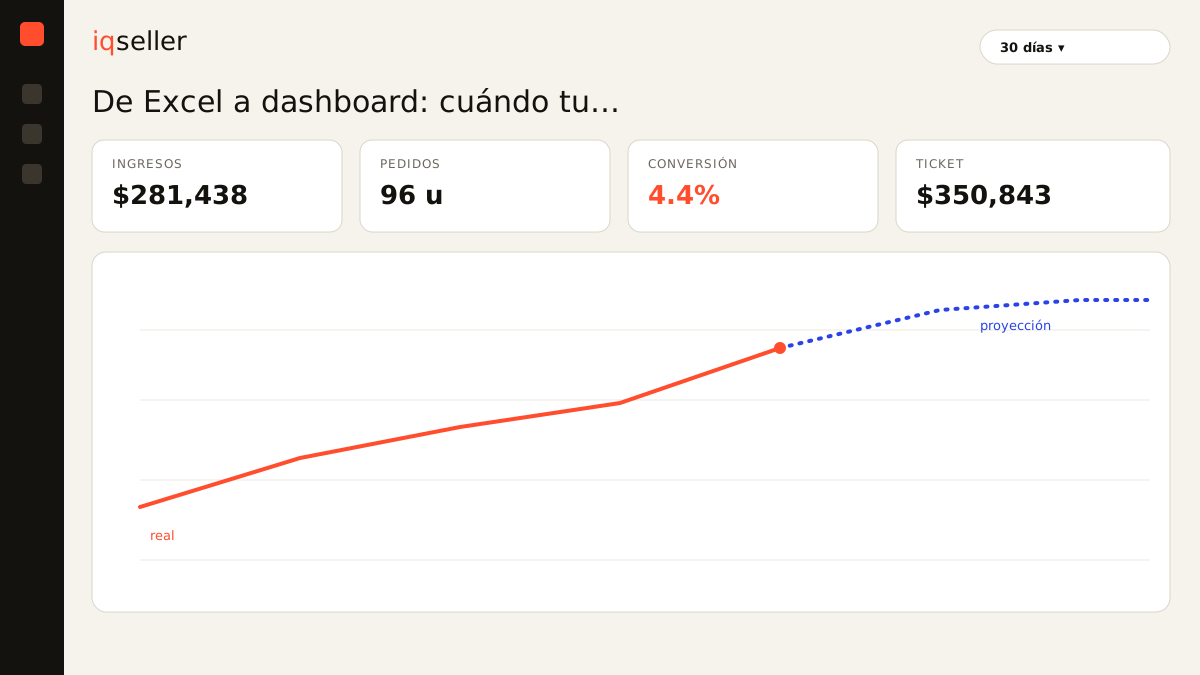
If you recognize three or more of those signs, your operation already calls for a dashboard. iqseller turns the manual Excel into a live panel that joins your channels and tells you what to do.
Ready to graduate from Excel? Join the beta waitlist.